Verification Evolution and Payout Reliability in Handheld Table Game Platforms
Written by Yara Wolf · Jul 27, 2026

Verification Evolution and Payout Reliability in Handheld Table Game Platforms
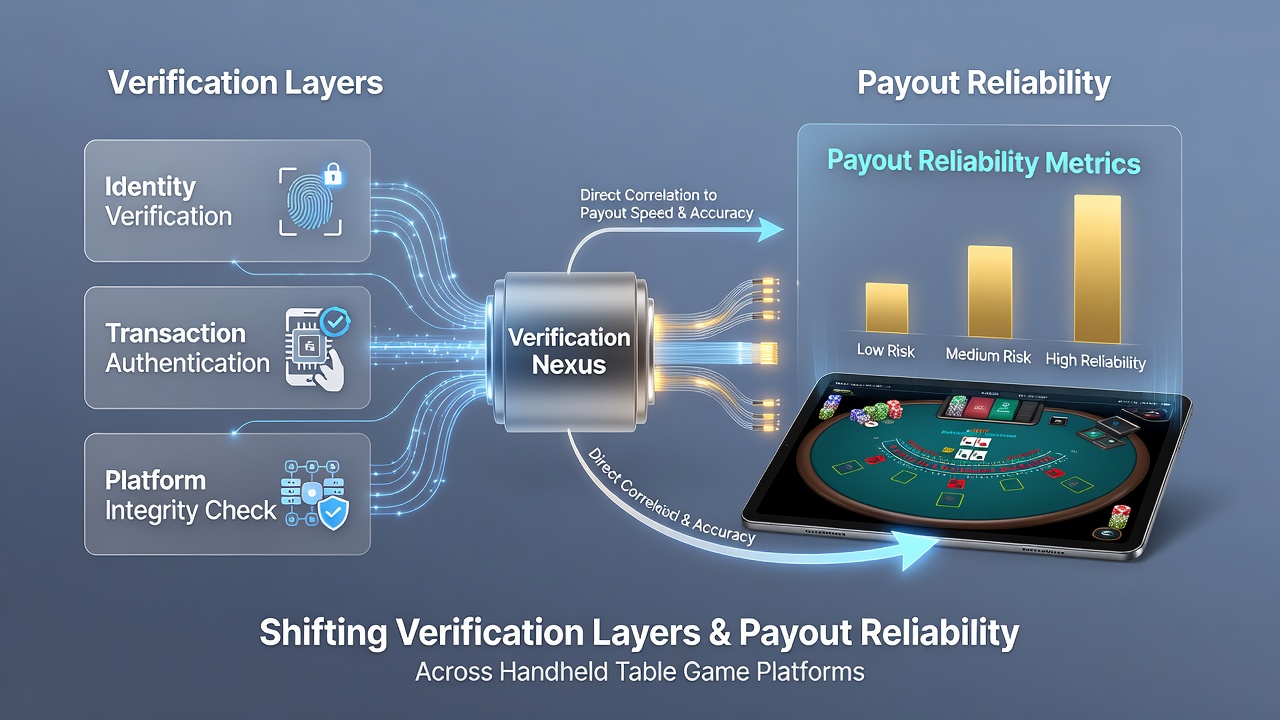
Handheld table game platforms have seen verification layers multiply over recent years, with operators layering identity checks, device authentication, and behavioral monitoring into single sessions. These shifts connect directly to payout reliability because each added step alters how funds clear and reach player accounts. Data from multiple jurisdictions shows that platforms using staged verification complete payouts faster when initial layers confirm identity before gameplay begins, whereas reactive checks after wins introduce delays that stretch timelines from hours into days.
Layered Checks in Mobile Blackjack and Roulette Environments
Operators deploy initial device fingerprinting followed by document uploads and then real-time facial matching during live dealer sessions. Research from regulatory bodies indicates that such sequences reduce fraud attempts by significant margins while maintaining steady payout flows. In July 2026 reports, several platforms recorded payout approval rates above 92 percent when verification completed prior to large bet placements, compared with lower figures on systems that triggered full reviews only after wins exceeded certain thresholds.
Those who've examined mobile poker and blackjack networks note that interlinked fund channels play a role here. When verification data feeds directly into banking partners, withdrawal requests move through pre-approved corridors without additional manual reviews. One study from a North American research institution found that platforms integrating verification with regional banking norms cut average payout times by 40 percent across encrypted networks.
Regional Banking Norms and Their Influence on Timelines
Currency corridors vary by jurisdiction, and verification layers adapt accordingly. Platforms serving users in areas with strict anti-money laundering rules often require upfront address verification alongside payment method confirmation. This approach ties into payout reliability because pre-cleared accounts avoid the secondary holds that occur when new banking details appear after a win. Figures from Canadian provincial regulators reveal consistent patterns where layered verification aligned with local banking standards produces fewer rejected withdrawals.
Observers note that skill-based mechanics in video slots and table variants add another dimension. When players switch between blackjack and progressive networks, verification systems track session continuity to prevent mismatched identity flags. This continuity supports reliable payouts because the platform recognizes returning verified users and processes requests through established channels rather than restarting checks.
Security Measures and Their Direct Effect on Fund Channels
Biometric updates and multi-factor protocols now appear across portable live dealer setups. According to industry association data, platforms that refresh verification layers quarterly maintain higher payout consistency than those using static systems. The connection appears in how quickly funds move once a withdrawal request hits the system: verified profiles route through automated approval paths, while unrefreshed profiles trigger manual queues.
Take the case of one operator that adjusted verification timing ahead of major sporting events in early 2026. Payout reliability improved because the platform shifted document rechecks to off-peak hours, freeing processing capacity for high-volume withdrawal periods. Similar adjustments appear in reports from European operators who coordinate verification updates with regional banking schedules.
Conclusion
Shifting verification layers continue to shape payout reliability across handheld table game platforms through their integration with banking systems and session management tools. Platforms that align these layers with regional requirements and maintain continuous identity tracking show steadier approval rates and shorter processing windows. Ongoing adjustments in July 2026 and beyond reflect operators responding to regulatory updates and player activity patterns in mobile environments.